
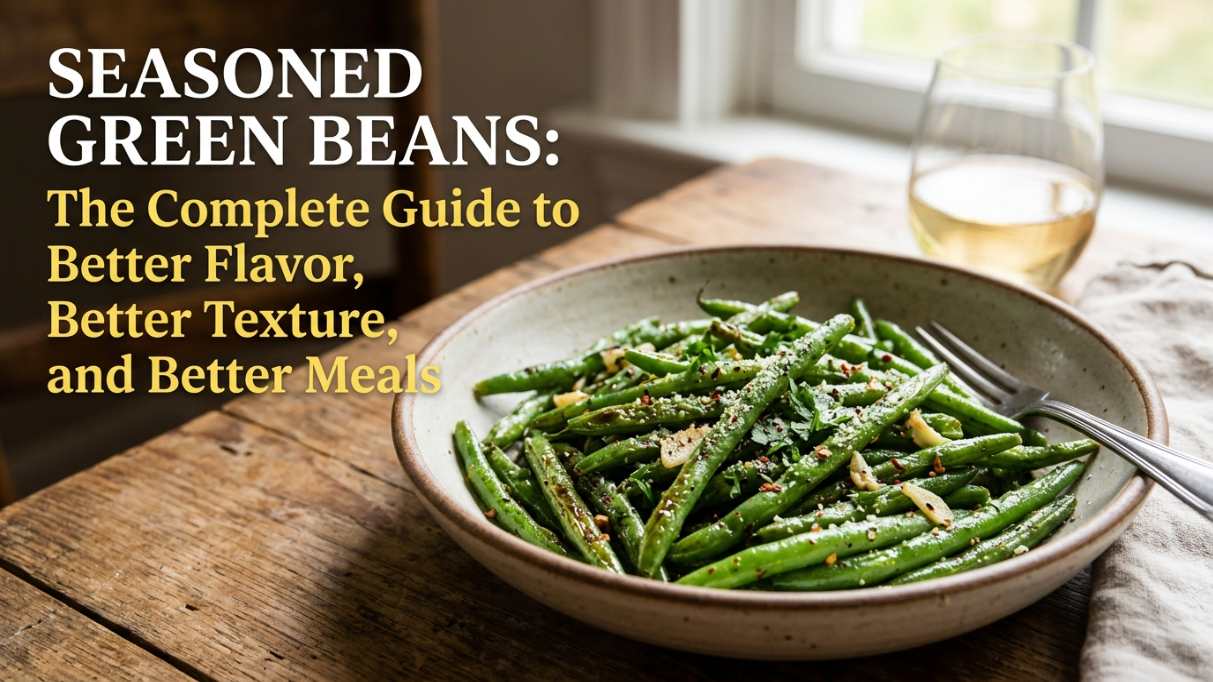

Fresh green beans are naturally crisp, colorful, and nutritious, but the right seasoning transforms them from an ordinary side dish into a memorable part of any meal. Seasoned green beans combine fresh vegetables with herbs, spices, aromatics, and cooking techniques that enhance every bite without overwhelming their natural flavor.
Whether you’re preparing a quick weeknight dinner, planning a holiday menu, or looking for healthier side dishes, learning how to make perfectly seasoned green beans gives you a versatile recipe you can adapt to countless cuisines and occasions. With a few smart techniques, simple ingredients become restaurant-quality comfort food.
Why Seasoned Green Beans Are a Kitchen Favorite
Green beans offer an excellent balance of freshness, texture, and nutrition, making them one of the easiest vegetables to pair with poultry, beef, seafood, vegetarian entrées, and grain-based dishes. Seasoned green beans stand out because they absorb herbs, butter, garlic, citrus, and spices without losing their bright character.
They are also incredibly adaptable. A single recipe can lean toward Southern comfort food, Mediterranean freshness, Asian-inspired flavors, or classic French cooking simply by adjusting the seasoning blend. That flexibility makes them one of the most dependable vegetables for home cooks of every experience level.
Choosing the Best Ingredients
Great flavor begins with quality ingredients. Fresh green beans should feel firm, snap easily, and display a vibrant green color without wrinkles or brown spots. Frozen beans are an excellent alternative because they are typically frozen shortly after harvest, preserving texture and nutrients while offering year-round convenience for seasoned green beans.
The supporting ingredients matter just as much. Fresh garlic, real butter, extra-virgin olive oil, cracked black pepper, flaky sea salt, onion powder, smoked paprika, fresh lemon juice, thyme, rosemary, parsley, and toasted nuts each contribute distinct layers of flavor. Using fresh herbs whenever possible creates brighter, cleaner results than relying solely on dried seasonings.
The Science Behind Great Seasoning
Excellent seasoning is about balance rather than intensity. Salt enhances natural sweetness, acidity brightens vegetables, fat carries aromatic compounds, and herbs contribute freshness. When these elements work together, seasoned green beans taste richer and more complex without requiring complicated techniques.
As the culinary saying goes, “Great cooking is about ingredients and how to prepare them.” That principle reminds cooks that seasoning should complement the vegetable rather than hide it. Layering flavors gradually during cooking almost always produces better results than adding every spice at the end.
Cooking Methods That Deliver Perfect Texture
Blanching followed by a quick sauté remains one of the most reliable methods. Briefly cooking beans in salted boiling water preserves their vibrant color, while an immediate ice bath stops the cooking process before a final sauté develops flavor. This approach keeps seasoned green beans crisp-tender instead of soft or watery.
Roasting provides a deeper, caramelized flavor with slightly crisp edges, while steaming preserves maximum freshness and nutrients. Pan-searing delivers rich browning in less time, making it ideal for busy evenings. The best method depends on whether you prefer brighter flavors or richer roasted notes.
Flavor Combinations That Always Work
One reason cooks enjoy this vegetable is its remarkable ability to pair with diverse ingredients. Seasoned green beans can be elegant enough for holiday dinners or simple enough for everyday family meals without changing the core recipe.
The combinations below illustrate how different ingredients influence flavor, aroma, and serving occasions.
| Flavor Style | Main Seasonings | Best Cooking Method | Ideal Pairings |
|---|---|---|---|
| Classic Garlic Butter | Garlic, butter, parsley, black pepper | Sauté | Roast chicken, turkey |
| Southern Style | Bacon, onion, garlic, black pepper | Simmer then sauté | Barbecue, meatloaf |
| Mediterranean | Olive oil, oregano, lemon, feta | Roast | Fish, grilled lamb |
| Asian-Inspired | Sesame oil, soy sauce, ginger, garlic | Stir-fry | Rice, tofu, salmon |
| Spicy Cajun | Cajun seasoning, paprika, cayenne | Sauté | Shrimp, grilled sausage |
| Herb Garden | Thyme, rosemary, parsley, olive oil | Roast | Pork, beef, roasted potatoes |
Experimenting with small adjustments helps develop your own signature recipe. A squeeze of lemon before serving, toasted almonds for crunch, or grated Parmesan can dramatically change the final profile while maintaining the vegetable’s fresh appeal.
Common Mistakes to Avoid
Overcooking is the most common reason green beans lose their appeal. Excessive heat removes their vibrant color, weakens texture, and dulls flavor. Proper timing keeps seasoned green beans pleasantly crisp while allowing seasonings to coat every bean evenly.
Another frequent mistake is under-seasoning during cooking and attempting to compensate afterward. Building flavor in stages creates better depth than adding large amounts of salt or spices at the end. Using fresh garlic instead of garlic powder alone and tasting throughout the cooking process also improves consistency.
Nutritional Benefits Worth Appreciating
Green beans contribute valuable fiber, vitamin C, vitamin K, folate, antioxidants, and plant compounds that support overall wellness. They are naturally low in calories while providing satisfying volume, making them suitable for balanced eating plans focused on nutrient density.
Preparing seasoned green beans with moderate amounts of olive oil, herbs, garlic, and fresh citrus creates a flavorful side dish without relying on heavy sauces. This approach supports both taste and nutrition, allowing vegetables to remain the centerpiece instead of becoming an afterthought.
Creative Serving Ideas for Every Occasion
One of the strengths of seasoned green beans is their versatility across casual meals and formal celebrations. They complement grilled steaks, roasted chicken, baked salmon, holiday turkey, vegetarian grain bowls, creamy mashed potatoes, and pasta dishes equally well. Leftovers can even be added to salads, wraps, or vegetable soups the following day.
Imagine preparing a family dinner where every main course is different, yet one vegetable satisfies everyone at the table. By adjusting garnishes such as toasted pecans, crispy shallots, fresh dill, Parmesan, or chili flakes, the same base recipe easily fits multiple preferences without extra effort.
Conclusion
Mastering seasoned green beans is less about following a rigid recipe and more about understanding ingredients, timing, and balance. Fresh vegetables, thoughtful seasoning, and careful cooking techniques consistently produce better flavor than relying on excessive spices or complicated preparation.
Once you become comfortable with the fundamentals, every batch becomes an opportunity to personalize the dish. Seasonal herbs, regional spice blends, and fresh finishing ingredients allow you to create variations that remain simple while delivering impressive results for everyday meals and special occasions alike.
Frequently Asked Questions
These common questions address practical concerns that home cooks often have before preparing this versatile vegetable side dish.
The answers are concise, actionable, and designed to help you achieve consistently delicious results with minimal guesswork.
Can I prepare seasoned green beans ahead of time?
Yes. Blanch the beans in advance, cool them quickly, refrigerate them, and finish sautéing with your seasonings just before serving for the best texture.
How do I keep green beans bright green?
Cook them briefly, then immediately transfer them to ice water. This stops the cooking process and helps preserve their vibrant color.
What seasonings pair best with seasoned green beans?
Garlic, butter, olive oil, parsley, thyme, rosemary, smoked paprika, lemon zest, black pepper, Parmesan, and toasted almonds are among the most popular flavor combinations.
Are seasoned green beans healthy?
Yes. They provide fiber, vitamins, minerals, and antioxidants, especially when prepared with olive oil, herbs, and moderate amounts of butter or salt.
Can I use frozen green beans?
Absolutely. Frozen beans are convenient, nutritious, and work very well in most recipes when cooked properly without overcooking.
Read More: Quick Easy Appetizers No Cook